
AX: Reading Your Org's Rhythm First
- series
- AI & Experience
- published date
- 2026.04.22
Even the most revolutionary skincare product can do more harm than good if it doesn't match your skin type. When you pay a premium price only to end up with breakouts instead of a glow, the problem isn't the ingredients—it's 'compatibility.'
This is exactly why the response on the ground remains lukewarm despite the corporate rush toward AI Transformation (AX). Often, companies attempt to transplant 'high-performance AI' while overlooking the organization's unique makeup and existing workflows. Socrates' 2,500-year-old wisdom, "Know thyself," remains profoundly relevant in modern AX strategy. For AI to become a genuine 'colleague' that works in sync with the organization rather than just another tool, we must understand how the organization works before we master the technology.
Based on insights gained from various AX projects, pxd has identified four diagnostic themes essential to audit before introducing AI.
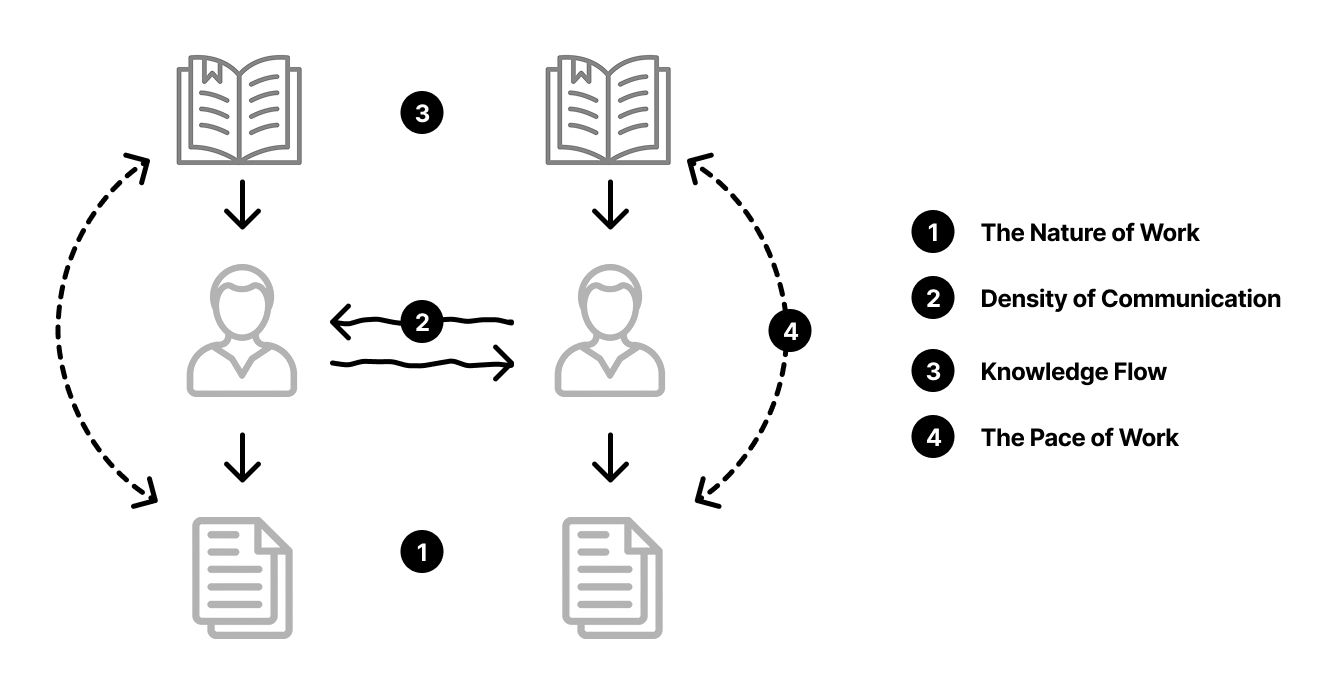
Four Themes for AI Synergy
1. The Nature of Work: Structure and Predictability
The first theme is understanding how rule-based the work is and how variable the outcomes are, because how AI should be configured must differ accordingly.
- Workflow Structure (Structured ↔ Unstructured): For tasks with standardized templates and clear procedures, AI can be utilized as an 'Agent' to maximize automation efficiency. Conversely, for unstructured tasks like planning or design where interpretation is key, AI should be positioned as a partner that enhances the quality of judgment through 'Reasoning Models.'
-
Predictability of Outcomes (Predictable ↔ Uncertain): In predictable areas like expense processing, AI assists by aiming for zero errors. However, in high-stakes, uncertain tasks like crisis response, AI should act as a decision-support tool—analyzing scenarios and providing insights rather than just delivering a single final answer.
2. Density of Communication: Collaboration Styles and Organizational Language
AI that fails to grasp an organization's unique communication rhythm will only produce superficial results.
- Collaboration Method (Collaborative ↔ Individual): In highly interdependent teams, AI acts as a 'Coordinator,' suggesting optimal times for communication or managing shared assets. For individual-focused work, it should concentrate on being a 'Personal Assistant' that manages deep task histories and context.
-
Organizational Language (Shared ↔ Divergent): From in-house jargon to the specific tone and manner required for different stakeholders, AI must learn the 'context.' An AI that understands a request like “Refine the tone for a senior executive’s review” is one that truly integrates into the organization.
3. Knowledge Flow: Information Sources and Knowledge Types
What the AI 'consumes' determines the reliability of its output.
-
Information Source (Internal ↔ External): If internal archives and reports are the core, designing a data feedback loop is the priority. If external trends are vital, the AI must be equipped to navigate and verify diverse, high-credibility external sources.
- Knowledge Type (Explicit ↔ Tacit): The challenge lies in capturing not only 'explicit knowledge' found in manuals, but also 'tacit knowledge'—the know-how stored in an expert colleague's mind. Designing a User Experience (UX) that allows AI to learn from informal networks and organizational practices is crucial.
4. The Pace of Work: Bottlenecks and Update Rhythms
AI must intervene at the right pace by identifying where work stagnates.
- Workplace Bottlenecks: AI should bridge gaps in segments where repetitive errors occur or progress is chronically delayed, optimizing the overall workflow.
-
Update Rhythm (Agile ↔ Rigid): Intervention points and knowledge calibration cycles must be synchronized with the organization’s heartbeat—whether it's an agile team providing frequent updates or a more rigid structure following fixed schedules.
Understanding People: The Core of Technology
Recent research highlights that 'contextual awareness' is the linchpin for AI adoption. Paradoxically, the most human element—deep reflection on how we work—is what makes the most advanced technology successful.
AX is not merely about switching tools; it is a journey of redesigning the way people work. An AI that fails to read your organization's language and rhythm will ultimately remain an 'unused skincare product'—an expensive but ineffective investment.
The first question for AX should not be about the technology, but about ourselves.
“How are we actually working right now?”
- Written by
- Seungyoon Lee